
Scleral Lenses: Fogging Issues With Easy Solutions
ABB Consultants are asked hundreds of questions every day regarding fitting issues that Eye Care Doctors are faced with in their practice. Let’s address scleral lens situations that can occur but can be easily solved.
SCLERAL LENS FOGGING
When faced with fogging symptoms or findings, the first thing to determine, is the location of the problem. Is it occurring on the front or back surface of the lens? It is critical to know the difference between the two locations, since this could be addressed differently.
In this quarterly article we will discuss Front Surface Fogging. In a future quarterly issue, we will cover the Back Surface Fogging issue patients might experience.
Generally, front surface fogging is an environmental cause.
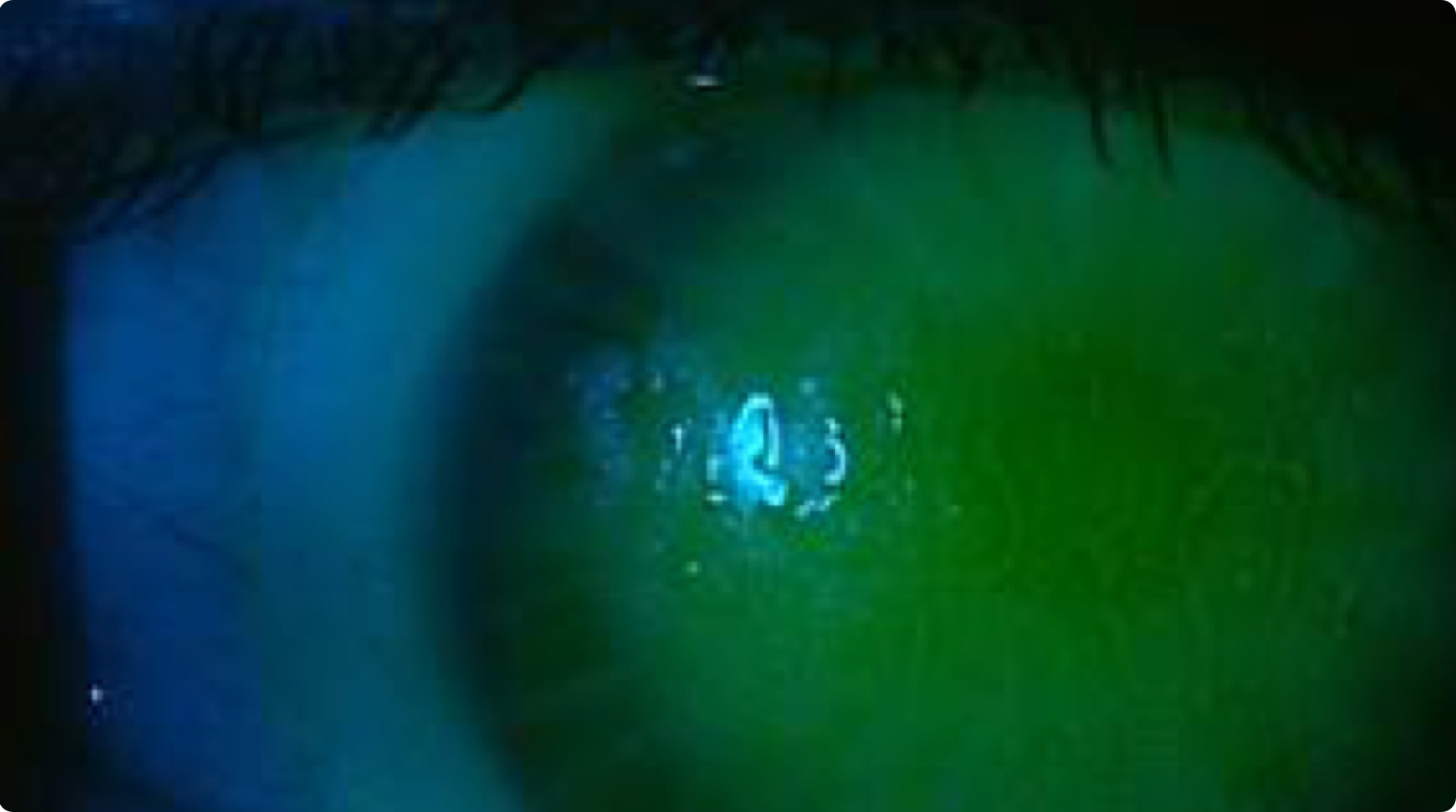
In the case of the photo above, the front surface is not wetting properly. Causes can range from poor care, improper solutions, MGD, ocular surface disease, tear film issues, make-up, tear debris or a slew of other environmental issues.
This fogging can occur immediately upon insertion, if the patient has tear film debris or poor lens surface issues are involved. They also could experience this after a few hours of wear, especially if it’s due to dryness or ocular surface disease.
So, how do you solve this as their trusted doctor?
- Care, handling, contact lens solutions, and general habits are usually addressed first. Don’t be afraid to dig a little deeper with your patients on their daily routine with their scleral lenses. This can be very enlightening!
- Next address any dry eye issues or poor tear production with your patients. Lid scrubs, hot compresses, additional tears, and other dry eye treatments can be very helpful in improving better tear quality to support the lens.
- In most cases, these issues can be addressed with proper counseling of the patient. Educate them on care and solutions while addressing the underlying dryness issue.
- Material choices of higher Dk lenses with lower wetting angles (i.e., Optimum Extra, Optimum Extreme, Menicon Z or Boston OX2) or with the addition of Tangible HydraPEG to their lens can resolve these issues before they begin. If you are not aware, Tangible HydraPEG is a lens treatment that will increase wettability and decrease deposits for your GP patients. At ABB, we routinely suggest this treatment to decrease the chance of front surface fogging.
If you have additional questions on front surface fogging, contact us today to speak with one of our scleral lens experts.



Other News
Troubleshooting Tips for Ortho-K
Here’s a few tips to help the consultant determine what changes should be made for specific situations.
Getting Started with Ortho-K
When establishing a vendor relationship with a orthokeratology manufacturer, there are several important factors to consider.
Application and Removal of Ortho-K Lenses
Proper application, removal, and hygiene are instrumental in the patient's long-term success with orthokeratology.